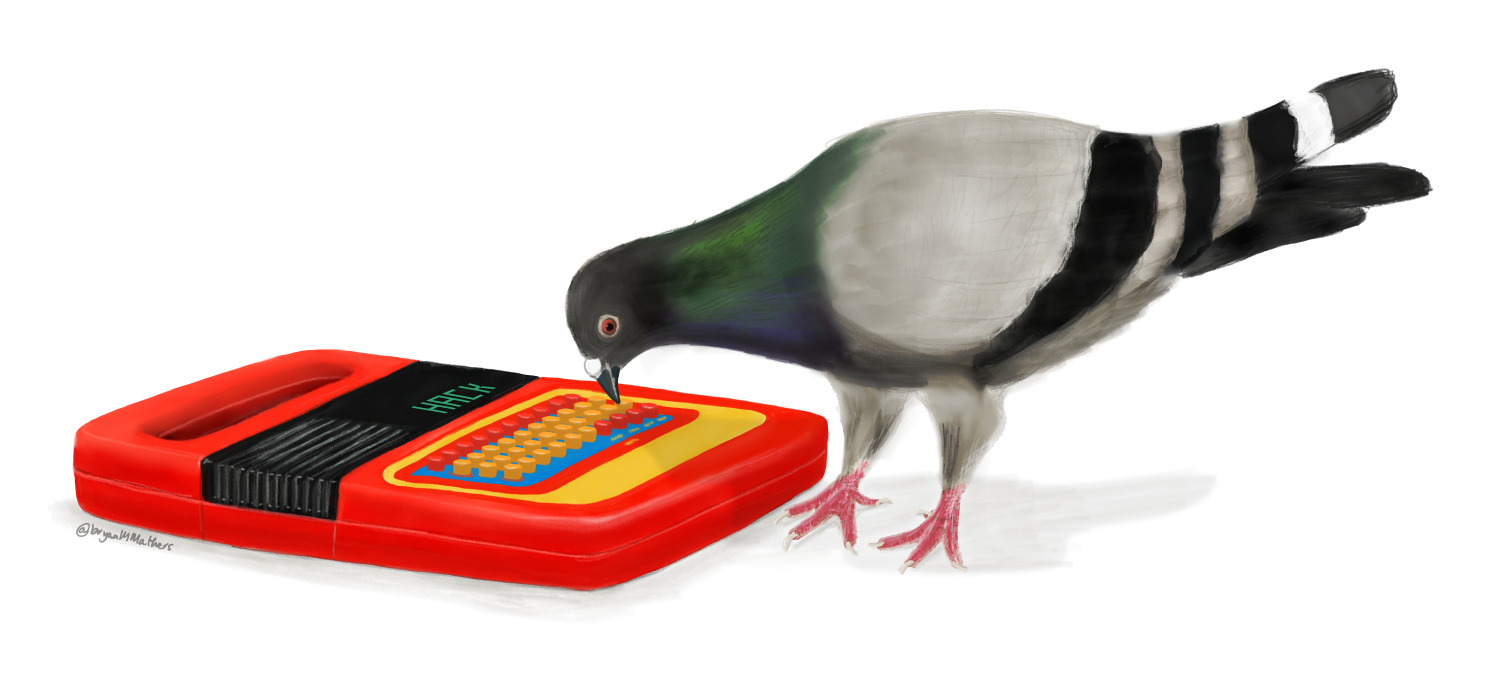
Who Is Ed-Tech For?


Who is ed-tech for?
The marketing copy -- whether on websites or in PowerPoint or in TED Talks and the like -- will all insist that ed-tech is, at the end of the day, for "the students." Even the products that are pitched to make teachers' and principals' and professors' lives easier do so with the promise that, at the end of the day, it's all in the service of helping students learn better -- making education, in the words of Daft Punk, "harder, better, faster, stronger," although we'd sure want to add in "cheaper" as well.
But ed-tech has largely and consistently failed to do that. The reasons are many. But one of them may just be that ed-tech isn't actually designed or built for students (or teachers); it isn't often bought by students (or teachers). While the stories about what ed-tech can do might appeal to lots of people -- ah, that genial robotic rhythm: "harder, better, faster, stronger" -- there's often a massive gulf between the ed-tech imaginary and a real educational experience.
Who is ed-tech for?
I haven't stopped thinking about this question lately -- in part because it gets at the heart of what I think* is going to be the history I cover in my next book. (More to come on that soon / someday, LOL.)
I haven’t stopped thinking about this question since I read the story about the "lifelike" robot teacher purchased by Salamanca Central School District -- I wrote about this in last week's newsletter: a classroom technology built by a company that previously sold sex- and companion robots.
Who sat in the meeting where this idea was pitched? Who thought that this was a good idea? Who looked at the mock-ups for Sally the sexbot and thought “great idea!” “Let’s do this for the children!”
Who is ed-tech for?
I haven’t stopped thinking about this question since the release of Claude for Teachers, which has been received with a fair amount of pushback and derision -- and in the case of one district, blocking it altogether.
Indeed, it’s right there in the name of the product, isn’t it: this is for teachers. But as Ben Riley asks, “why?” Why, particularly when much of Anthropic’s success has come from a pitch made to “the enterprise,” to the managerial imagination of big business, do this for teachers -- that is, why build for and market to individual teachers? Why bypass district decision-making and district governance? And importantly here, why make teachers (and not schools or districts as the law dictates) be the ones responsible for protecting student data and student privacy?
Of course, we might read Ben’s question “why” in a more existential light too: like, why does this even exist? And we might channel my friend David Golumbia -- may he rest in peace -- and answer, with full confidence, that it should not.
But here, as with so much of ed-tech (and arguably almost all of “AI”), we can see that this effort really only works for the company itself. This is about gaining access to public funding but more importantly to classroom data, as the “AI” industry needs to continually aggregate and extract more and more realms of human-created data so that their models don’t collapse. This is about cornering a market (or preventing their competitors from doing so); this is about trying to establish the ultimate in vendor lock-in, one that is not simply the cultivation of brand loyalty but of cognitive dependence as well.
Who is ed-tech for?
As it stands, “AI” has yet to find its killer app, in education or anywhere. (Other than plagiarizing essays and cheating on homework, I suppose.) We’re years into this so-called revolution, and there really isn’t anything other than a bunch of anecdotes about how so-and-so found a nifty way to do such-and-such a bit faster, a lot wordier (although certainly not more cheaply). These stories of small bureaucratic victories -- and golly, congrats if that’s you, LOL -- aren’t really enough for an industry that has promised to change everything forever, to do everything forever.
In schools, “AI” promises to be the teacher, the tester, the grader, the therapist, the librarian, the researcher, the administrator, the security officer, the bus driver, the office secretary, the coach, and the student. Anyone who knows anything about education knows that that means this technology actually works for no one but the storyteller (the hustler) himself.
Elsewhere...
- “Some Kids Will Never Think AI Is Cool,” Elana Klein reports in Wired
“I think that [AI] should stand for artificial idiot” – Marian Agnew, age 9
- “Can you rewire your brain?” -- what the “brain is a computer” metaphor gets wrong
- “When A.I. Is a Member of the Family” -- well, this piece by Jessica Contrera in The New Yorker was just wildly depressing
- Also depressing: “AI Mania Is Eviscerating Global Decision-Making” by Nikhil Suresh -- “Fight the good fight, and don't let the bastards grind you down. Godspeed.”
- Sometimes it’s the cooing over “AI” in education that drives me to despair; other times, it’s when someones starts a sentence with the phrase “I listened to a podcast called Sold A Story...” Anyway, please “Stop Saying Kids Can’t Read” writes Megan Greenwell in Wired
“The effect of ChatGPT on educators’ lives is catastrophic. Whether you intended to do it or not, you’ve made every teacher’s life infinitely more difficult than it was two years ago. So, just let that settle in . . .
“If students are using it to compose, which is the biggest tragedy of all, they’ll never learn to write. And their voice is stolen from them. They’ll never have the ability to say their truth and tell their own story. And that’s silencing an entire generation or two.” -- Dave Eggers, speaking truth to power to their faces at OpenAI
- “AI” is just a symptom of a much deeper rot that’s wearing away at trust and accountability and yes, democratic education. It’s a rot bound up in white supremacy and imperialism and fraud. It plays out in ways big and small, such as in the National Civics Contest, as Sam Fortier writes about in NOTUS
- “‘We Started Calling It Baby Prison’ -- A pattern of horrific alleged child abuse has marred Bright Horizons’ image. Why are parents still signing up?” – what privatization, and particularly private equity, does to education. But yeah, I'm sure this time things'll be different with ed-tech

Today’s bird is the laughing gull. So named for its call, this bird is an opportunistic scavenger. And I’m not pointing fingers or naming names here, but yeah. Maybe I am.
Thanks for reading Second Breakfast. Please consider becoming a paid subscriber. Your financial support is what enables me to do this work.