
You Do Not, In Fact, Have to Hand It to Them


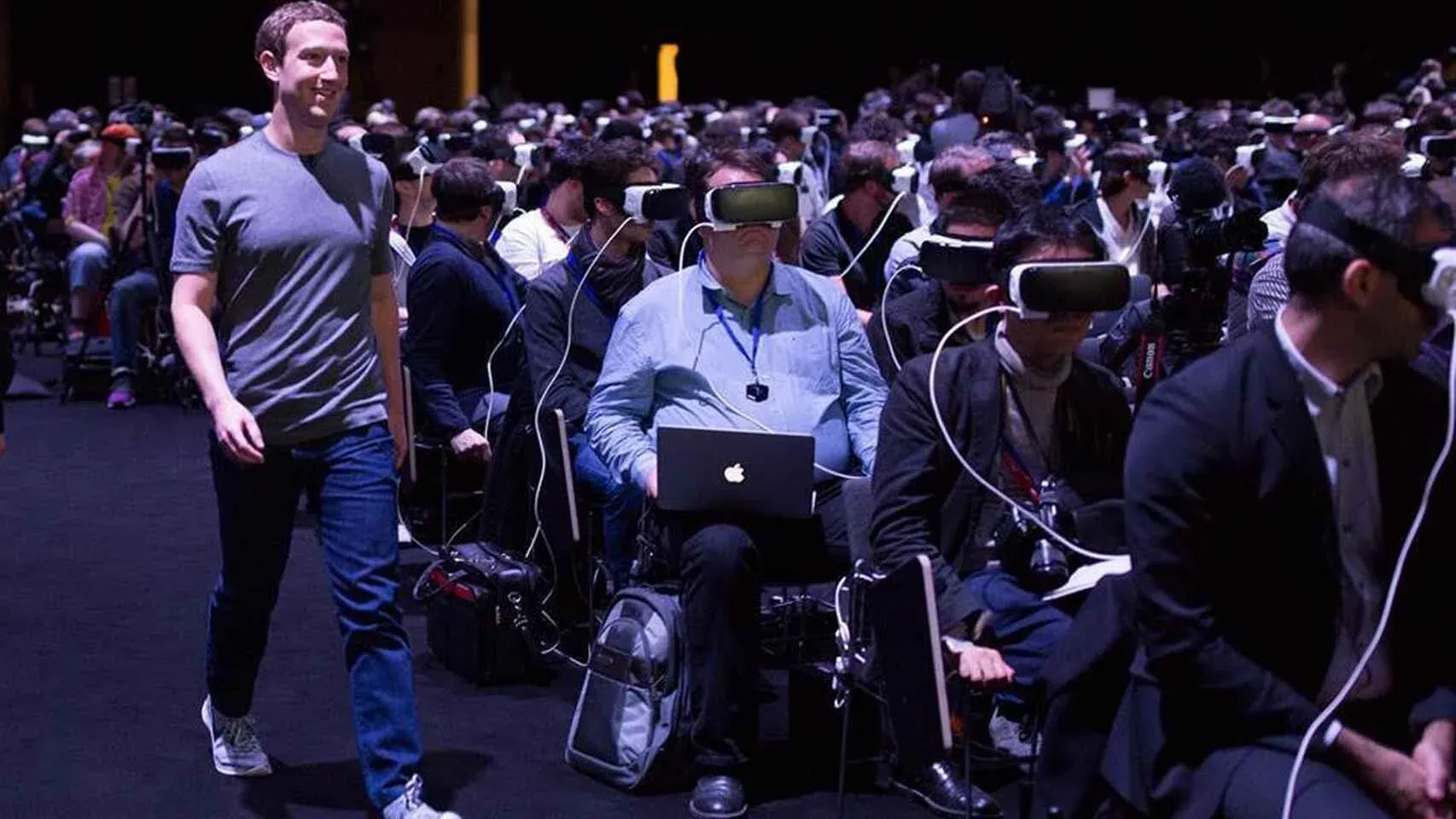
Way back in 2016, Mark Zuckerberg made a surprise appearance at the Mobile World Congress in Barcelona, memorialized in a photograph of him striding to the stage past rows of men with the Oculus Rift VR headsets strapped to their faces:
Fast forward a decade and now the founder of Oculus, Palmer Luckey, runs a military technology company which, according to Wired, wants to "own the future of war tech" – a future it will share, I suppose, with Palantir as the two comprise the cornerstone of the Trump Administration's plans to conquer/defend/surveil, to reshape global politics.
While consumers have overwhelmingly said "no thank you" to VR, the US military remains committed to a vision of high tech battles, although of course they'd only ever be "virtual" for American soldiers; the violence and death and devastation of others – soldiers and civilians alike – are always off-screen, unreal, erased, unwritten.
So VR – or at least those awful Oculus headsets and this teenage fantasy of a hero's life lived through them – aren't over. But Zuckerberg's plans for a future in which we all occupy his "metaverse" – plans so big that he had to rename Facebook to Meta – have crumbled. LOL. LOL. LOL. Again, recall that when he announced the company's virtual project, "Horizon Worlds," just five years ago, Zuckerberg declared that very soon all work and play would take place there – a prediction that, as some analysts put it, had led the company to throw billions of dollars "in the toilet."
Zuckerberg insisted that the metaverse and digital-everything-economy were the future.
And now, we hear a similar story, the insistence that "artificial intelligence" and that digital-everything-economy are the future.
And once again, this will be proven wrong.
It will be proven wrong because everybody hates it. A decade ago, people saw that photo of Zuckerberg, waltzing past the masked men at MWC and shuddered. "That's dystopian," almost everyone muttered. "That's dystopian," many of us are still saying, but now even more loudly, more fervently. A recent survey by NBC News found Americans rank the favorability of "AI" below every major politician in the country, below ICE.
Everybody hates tech. Everybody hates tech billionaires. Nobody wants their bullshit.
The future that the vast majority of people want – for themselves, for their children – is not one in which we can only afford to buy digital replicas of products and digital real estate (Facebook board member Marc Andreessen has been quite explicit about this goal) because everything that's actually real is only accessible to the rich; where we're all yanked around by algorithms; where there are no jobs; where there is no art, only slop; where there is no green space, no wilderness, no water because the planet is covered in the data centers that power this destruction.
The technology industry sells a story of inevitability. It is, in no small part, a profoundly anti-democratic story, one that dismisses if not denies any attempt at agency, let alone resistance. "There's nothing you can do," investors and CEOs and pundits parrot. "Resistance is futile," they smirk (yet another example of their incredible inability to understand the science fiction they like to reference).
Their technology, their politics, their vision of the future -- none of these are what we want. More importantly, none of this is inevitable. Indeed, if you step away from the chatbot and its sycophantic siren call -- my god, please step away from the chatbot -- you can see that their plans are deeply deeply flawed. Indeed, in places they are already falling apart.
OpenAI announced this week it was closing Sora, its video-slop social network, and Disney -- blinkered by the prospects of being able to replace the unionized labor of cartoonists and writers, no doubt -- withdrew from its billion-dollar investment in the "AI" company.
Two separate court cases -- one in New Mexico and one in California -- found Meta liable for harms to children, including sexual exploitation. In the latter case, a jury found Meta and YouTube negligent, having knowingly built products that were “addictive” and having failed to warn users of the danger.
It is too soon to tell if this is, as some have suggested, the tech industry’s “Big Tobacco” moment – a moment that forces the industry to change its marketing and its product. This may well be true for the foreseeable future as the industry is run by the world’s richest men – men who have no problem funding all sorts of anti-democratic initiatives and the politicians behind them (Google co-founder Sergei Brin recently spending $45 million to lobby against a proposed billionaire tax in California). But these jury trials make it quite clear that lots of regular folks are really really angry.
We are, no doubt, in the middle of a big backlash against social media, a backlash against education technology – although those with their noses too close to the screens might not see it as such, and although plenty of folks who get paid to talk tech are quick to recast everything about this as some sort of "moral panic." (I'll have more to say on that next week, I reckon.) But even if this particular round of revolt (resistance and revulsion) doesn’t bring about the demise of tech billionaires and their terrible terrible ideas – I mean, fingers crossed – I still will be here writing, reminding you that the future the Zuckerbergs and Musks and Karps and Andreessens and Thiels want to bring forth rests on the shakiest of foundations.
As we’ve seen since even before the resurgence of interest in “AI,” theirs is a future that relies on and reinvigorates the petroleum industry and its oligarchs. It is a future that will – if not through war then certainly through environmental devastation – destroy the planet. Meta's lawyers might sneer at the damages jury trials award them; you cannot just brush away impending climate collapse.
And as much as education wants to wrap itself in a warm rhetorical blanket of “the future!” when it embraces ed-tech and “AI,” in doing so it may also find itself, as Colm O’Neill argues, being cast a “climate criminal." In doing so, more people may come to recognize that powerful people and powerful institutions in education are hard at work undermining the future for those they're tasked with preparing for it.
One Thing Leads to Another:
- “Why exposing young children to AI content could have irreversible consequences” by Sarah Whitcombe-Dobbs in The Conversation – that is, problems with language development and social and relational functioning. And I get it: we should all be very concerned about young minds and whatnot. But I worry about old minds too (particularly as I see an increasing number of folks who appear to be utterly addled by “AI” usage). And I worry that it will be institutions like schools, like media companies, thoroughly overrun with the spirit of neoliberalism and techno-solutionism, who’ll work hard to convince us we should comply with the tech industry’s visions. Meanwhile, “How AI Is Creeping Into The New York Times” by Vauhini Vara.
- Via Inside Higher Ed: “Canvas Unrolls AI Teaching Agent.” Supposedly this agent serves to automate what Canvas deems “low-value tasks,” and it’s certainly worth asking what exactly that means. Who has decided which educational tasks are valuable? (There is no such thing – another reminder in a newsletter full of them – as “low skill labor,” other than as a justification for low pay.) How might the tasks that are automated here actually be constitutive of the work that teachers do? Grading. Lesson design. Course design. Communication. These are the work.
- “Why AI Companies Want to Take Control of Your Computer” by John Herrman. Spoiler alert: it's more market research so as to better promise your boss that Claude can automate your job. (Related, from a couple of weeks ago, also in New York Magazine: “The Laid-off Scientists and Lawyers Training AI to Steal Their Careers.”)
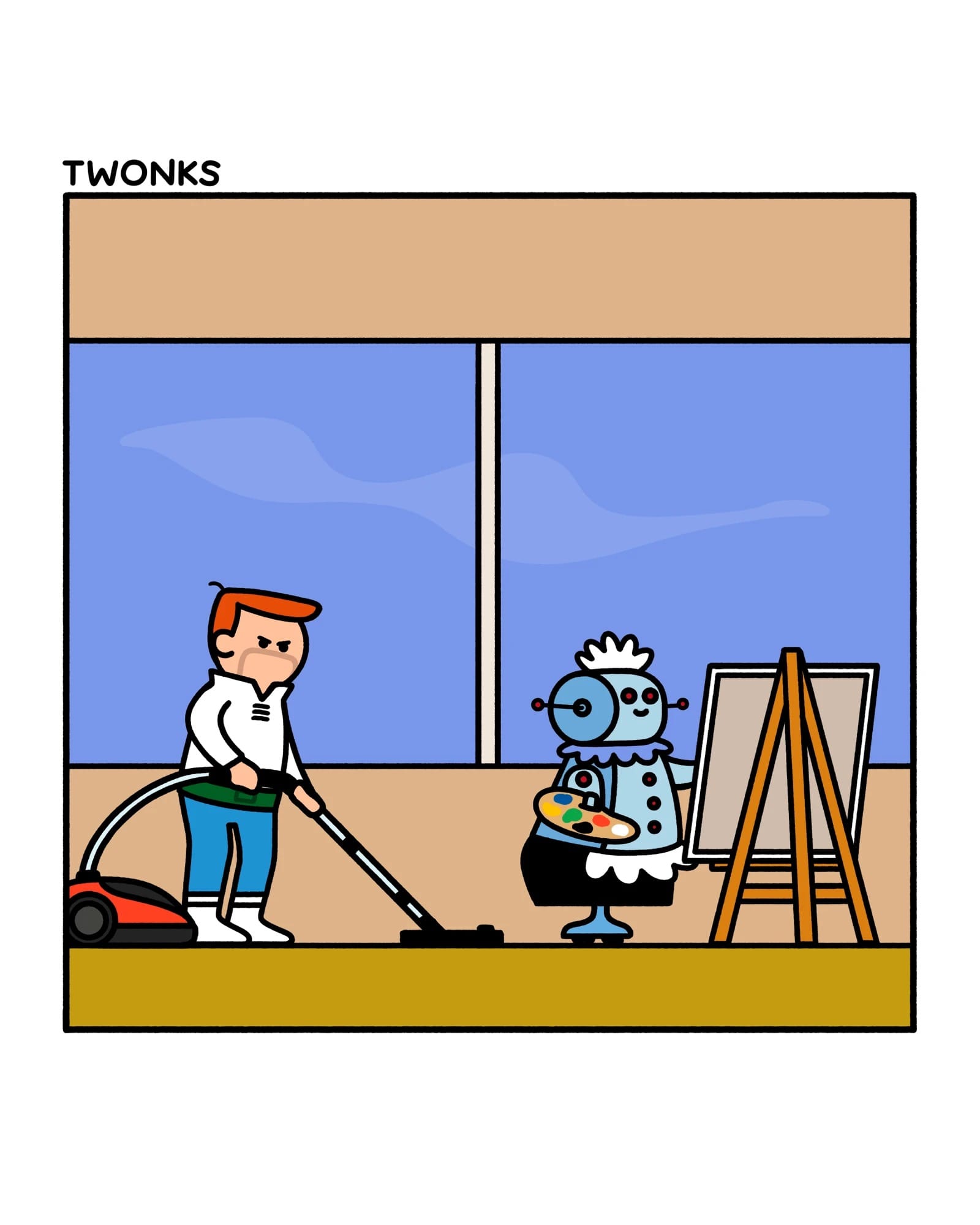
- “Melania Trump pitches robots as potential educators for American schoolchildren.” “Imagine a humanoid educator named Plato,” the First Lady cooed, her speechwriters too poorly read to know that the correct cliched Greek philosopher to reference here is Aristotle, tutor to Alexander the Great. (Linking for the headline alone: "Melania and the Tradwife Bot" by Rebecca Onion.)
- Via ProPublica: “Trump Has Detained the Parents of More Than 11,000 U.S. Citizen Kids.” This is the AI future these men are clamoring for.
- 404 Media’s Emanuel Maiberg writes how “This Company Is Secretly Turning Your Zoom Meetings into AI Podcasts.” It is worth noting here that the tipster in this story was an educator who discovered that, without anyone’s knowledge or consent, WebinarTV had turned an organizing call for his community to address the problems of ICE in schools and discuss how to keep students safe into “content.”
- Ed-tech remains "cop shit": “New digital hall passes track bathroom breaks, gather data in NYC schools.”
- Kevin T. Baker in The Guardian: “AI got the blame for the Iran school bombing. The truth is far more worrying.” The article cites Morgan Ames’ excellent book The Charisma Machine on One Laptop Per Child, which Baker describes as “a study of how certain technologies draw attention, resources and attribution toward themselves and away from everything else. The usual framework for understanding this dynamic is ‘hype’, but hype only describes what boosters do, and it assigns critics a privileged debunking role that still leaves the technology at the centre of every argument. A charismatic technology shapes the whole field around it, the way a magnet organises iron filings. LLMs may be the most powerful instance of this type in history.” Baker’s article describes how “AI” has encoded the past – past data, past decision-making. This, despite the promises, does not destroy “bureacracy.” (Ah. Those “low value tasks” again.) Rather it obscures accountability.
In the days after the strike, the charisma of AI organised the entire political conversation around the technology: whether Claude hallucinated, whether the model was aligned, whether Anthropic bore responsibility for its deployment. The constitutional question of who authorised this war and the legal question of whether this strike constitutes a war crime were displaced by a technical question that is easier to ask and impossible to answer in the terms it set. The Claude debate absorbed the energy. That is what charisma does.
It has also occluded something deeper: the human decisions that led to the killing of between 175 and 180 people, most of them girls between the ages of seven and 12. Someone decided to compress the kill chain. Someone decided that deliberation was latency. Someone decided to build a system that produces 1,000 targeting decisions an hour and call them high-quality. Someone decided to start this war. Several hundred people are sitting on Capitol Hill, refusing to stop it. Calling it an “AI problem” gives those decisions, and those people, a place to hide.

Today’s bird is the fairy pitta, a small colorful bird whose population is sharply declining due to all the threats listed above and more. (The Wikipedia article notes the dangers of hikers, photographers, and bird watchers.) The fairy pitta is a solitary bird and eats primarily earthworms, but from time-to-time, as the photo above indicates, it will choke down a beetle or two.
Thanks for reading Second Breakfast. Please consider becoming a paid subscriber as your financial support enables me to do this work. No AI was used in any of this email. Hell, I didn't even use spellcheck.