End Over End


The Atlantic has pronounced that “The End of Reading is Here,” the latest in a long series of stories, there and elsewhere, that lament that no one -- but specifically no student -- reads anymore. They don’t read; they can’t read.
When I say “long series,” I really do mean long. In 2024, The Atlantic published a piece on “The Elite College Students Who Can’t Read Books.” More than a century earlier -- quite early in the history of public education in this country, to be clear, as well as in The Atlantic’s own existence – the magazine’s writers were wringing their hands with similar concerns: “Does the system of education in our common schools give the pupils a taste for good literature or much power of discrimination?” Charles Dudley Warner asked in 1890. “Do they come out of school with the habit of continuous reading, of reading books, or only of picking up scraps in the newspapers, as they might snatch a hasty meal at a lunch counter? What, in short, do the schools contribute to the creation of a taste for good literature?”
It sure seems that as long as we’ve believed everyone should read, we’ve fretted that everyone doesn’t (or at least The Atlantic sure has worried) -- they don’t read enough, and even if they do, they don’t read the right kinds of material.
We’re probably always right to worry a little – and maybe even worry a lot. Reading has been foundational for how we learn things, and not just how we learn “facts” and how we acquire “knowledge,” but how we learn about one another. The novel, in particular, grants the reader profound access to someone else’s interiority. “While reading, we can leave our own consciousness, and pass over into the consciousness of another person, another age, another culture,” Maryanne Wolf writes in Proust and the Squid: The Story and Science of the Reading Brain. Reading builds understanding and empathy – to others’ lives, others’ identities, others’ arguments and expression. And no doubt, it’s what often feels like an utter dissolution of any shared social contract today, even more than any loss of a shared reading list, that makes our particular “end of literacy” feel so utterly threatening.
But again, it seems as though “the end” has always been here, or at least near (particularly in The Atlantic’s headlines). Media theorist Marshall McLuhan declared we were on the cusp of a post-literate world back in 1962. His student Neil Postman said much the same again in the 1980s.
For Postman, the problem was television. And I think you could argue that that still is the problem. Indeed, former Atlantic writer Derek Thompson suggested last year that “everything is television” -- that much of what people are doing online is simply watching TV, which now streams on devices that are smaller and more portable; its content -- RIP Neil Postman -- shorter and even shallower.
It’s almost always been technology of some sort or another that’s posited as endangering, eroding, and now in the case of The Atlantic, actually ending literacy. It’s “AI” and social media and the much vaguer, generalized threat of “screens.” It’s the design of these products that have simultaneously demanded and shortened our attention span, making the kind of slow contemplation that reading requires feel even more laborious.
But maybe illiteracy is teachers’ fault -- ah yes, that familiar story line -- for adopting what The New Yorker recently dismissed as “vibes based literacy” instruction rather than the (so cleverly named) “science of reading.” (From The Atlantic, in 2024, a story on Lucy Calkins and “How One Woman Became the Scapegoat for America’s Reading Crisis.” If the vibes are bad, she’s the culprit, plenty of publications and podcasters would have you believe. And yet, "the reading wars" and debates over phonics versus whole language extend back to the nineteenth century too.)
Or maybe educators or teacher-educators aren’t directly to blame; but surely, somehow, somewhere, schools must be at fault. Maybe the decline of reading is the fallout of some failed education policy: the Common Core, perhaps, or going farther back in time, No Child Left Behind. Or maybe the better word here (certainly among the usual suspects of education reform) is not so much “failed” as a legacy “unfulfilled” – The Atlantic, for its part, has been at the forefront of calls to bring back standardized testing and its associated high-stakes accountability measures.
Perhaps we're perpetually stuck at "the end of reading" because we're so caught up in finding a culprit for some broader civilizational decline. (We're always told we're at the end there too, it seems.) It's not that I don't worry about reading – who's reading, how much reading, what kind of reading material, and so on. I do. I worry because I love reading – books are among the most wondrous inventions of humankind. And I love reading because without it, I could not write and I could not think. Not well. Not clearly. Not intelligently.
These practices are all deeply intertwined for me, and I worry that it's the latter in particular that culturally (technologically, politically, and economically) we no longer value. We don't invest in cultivating young readers because we don't actually want thinkers. We don't actually value imagination or inquiry, because increasingly, we find ourselves in a world for which the only forms of agency and expression involve clicking and consuming.
Other Things to Read But You Should Probably Just Get Offline Instead:
“The Hamptons Issue” of New York Magazine features yet another story on the awfulness of Alpha School: “A camp from the AI ‘school’ offers lessons on entrepreneurship, like how to forage for appetizers and stage an open house.”
The New York Times claims that AI companies now want to hire philosophy majors. Something about helping the bullshit machines to bullshit, I reckon.
Via Inside Higher Ed: “Brown Professor Suspects Majority of His Class Used AI to Cheat.” Economics professor, not philosophy professor, so those "AI" companies needn't worry at all about the integrity of their new hires, I'm sure.
The Hechinger Report’s Jill Barshay on some of the latest research on AI in math class, which once again seems to suggest that the technology makes things worse.
Ohio’s Governor signed a law requiring University of Iowa students take a course from the Center for Intellectual Freedom. Because nothing helps you avoid campus indoctrination and “resist the woke mind virus” like having the government force you to take a class on “intellectual freedom.” I bet there’s an “AI literacy” component.
Chalkbeat reports that “Randi Weingarten said Newark Public Schools visit confirmed her fears about AI in the classroom.” Jeez. Good thing the union didn’t take a bunch of money from the tech industry in order to train teachers on how to automate their profession.
“Teen social media bans let adults off the hook,” Tim Requarth argues. We have to stop the technology companies from algorithmic manipulation period, not just from exploiting the attention of children and teens.
Andrew Fedorov writes about “The Effective-Altruism Comeback,” and the philanthropic plans for the new “AI” billionaires. Considering what the last few cycles of tech billionaires have done to education, and considering that these “AI” folks are even more whackadoodle... yikes.
“We Are Losing the Ability to Discover What We Didn’t Know to Ask,” writes neuroscientist Anne-Laure Le Cunff.
Digital technologies -- and not just “AI” -- are designed to reward instantaneity. As such, they discourage contemplation. They diminish curiosity. We’ve recently come to recognize, I hope, that society has confused “research” and “search,” trading deep and hard-won expertise for a quick and shallow Q&A. But as Le Cunff argues many of us don’t even ask good questions any more. We don’t wonder. Like reading, it’s just too slow and inefficient, and the ideology and business of computing want us clicking clicking clicking clicking instead.

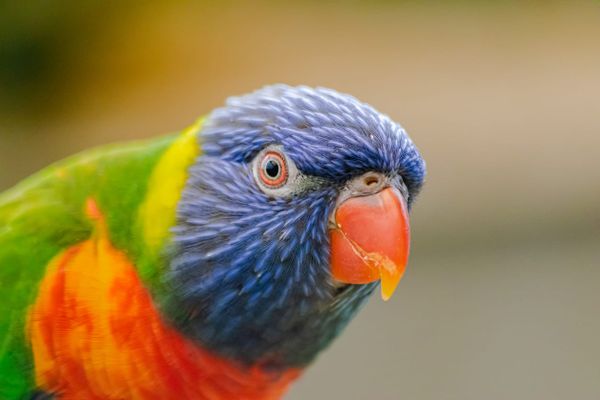
Today’s bird is the kea, a species of parrot endemic to New Zealand. According to Wikipedia, the kea has “a sense of impulse control and forward planning,” probably because it stays the hell off of the Internet. A very smart bird, “kea can wait up to 160 seconds for a more preferred reward. In addition, kea also use trial-and-error tactics and use observational learning to solve difficult problems and when faced with puzzles and locks.”
There’d long been reports among New Zealand sheep farmers that the parrots would prey on their livestock. These fears led to bounties on the bird, which is now endangered (and now protected too, even as much as Kiwi love their lamb). A parrot killing sheep?! That sounds like "AI" – but attacks are documented, and well, sheep are stupid and look at the beak on that sucker.
Thanks for subscribing to Second Breakfast. Please consider becoming a paid subscriber as your support allows me to do this work.